Key Takeaways
Email marketing works best when it is treated as a dependable sales process, not a frantic blast to everyone you have ever met.
- Build permission-based attention before trying to sell.
- Give subscribers a clear reason to stay on your list.
- Choose tools that reduce manual follow-up.
- Write specific emails with one obvious next step.
- Measure revenue and customer action, not vanity numbers.
Start with the email marketing basics that actually matter
Email is still one of the few channels where a small business can reach people directly, repeatedly, and on its own schedule. Social platforms can introduce you to prospects, but their reach and rules can change without warning. A useful email program gives your offers somewhere stable to land. The trick is to make every message earn its place in the reader’s inbox.
Why email still beats rented audiences and social reach
You do not own a social audience; you borrow access to it. An algorithm can bury a post, while a permission-based email list gives you a direct line to people who asked to hear from you. That does not mean email is automatically effective. A dull message sent too often is still dull, and people will leave.
The advantage is control. You can make a timely offer, follow up with someone who showed interest, and learn which subjects and ideas get a response. Email also gives you room to explain a service instead of squeezing the whole pitch into a short post.
The difference between subscribers, leads, customers, and buyers
These labels describe different levels of commitment. A subscriber gave you permission to communicate. A lead has shown some buying interest, perhaps by requesting a guide or asking for a quote. A customer has purchased, while a buyer is the customer who is actively making another buying decision now.
Treating them all alike creates awkward emails. A new subscriber needs context, a warm lead needs proof and clarity, and an existing customer may need a useful next offer or a reason to return. Your list becomes more valuable when the message matches the relationship.
What a realistic small-business email funnel looks like
A practical funnel is not a maze of twenty-seven automations. It may begin with a helpful signup incentive, continue with a short welcome sequence, and then move people into regular educational and promotional emails. When someone clicks, replies, books, or buys, that behavior should influence what they receive next.
The content marketing strategy for small businesses approach is useful here because it keeps attention on profit rather than empty activity. You are not trying to win every subscriber. You are trying to make the next sensible conversation easier.
The numbers worth watching from day one
Start with a small dashboard. Watch delivery, opens as a directional signal, clicks, replies, bookings, purchases, unsubscribes, and revenue attributed with reasonable care. No single metric tells the whole story, especially when privacy settings affect open reporting.
Ask better questions: Which offer created action? Which segment bought? How many people moved from inquiry to appointment? A campaign with fewer clicks but two profitable customers can beat a campaign that collects a pile of harmless curiosity.
Build a list of people who want to hear from you
A healthy list is built around permission and relevance. You do not need the biggest list in town; you need a list containing people with a genuine reason to care. Make the exchange obvious: they give you an email address, and you give them something useful or timely. Then keep the promise you made at signup.
Create a lead magnet your best prospects will value
A lead magnet should solve a narrow, expensive, or irritating problem. A checklist for preparing a home for service, a short buying guide, a cost calculator, or a useful local planning sheet can work better than a vague “join our newsletter” request. Make it specific enough that the right person recognizes it immediately.
Do not create a prize that attracts everybody. A generic giveaway may inflate your list while filling it with people who never intended to buy. The best incentive filters for fit as much as it attracts attention.
Put signup forms where buying intent already exists
Place forms near moments of interest: a service page, a pricing explanation, a booking confirmation, a resource download, or a helpful article. The form should say what arrives, how often it arrives, and why the reader should care. Keep the number of fields modest unless each extra answer genuinely improves your follow-up.
A form buried in the footer is easy to ignore. A relevant invitation beside a customer’s question feels like a natural next step. Test the wording, but do not hide the terms of the exchange.
Set expectations with a clear welcome promise
Your first message should confirm what the person signed up for and deliver the promised value quickly. Tell them what sort of advice, offers, or updates they can expect, and give them an easy way to learn more. This is where trust begins, before any clever subject line matters.
A simple welcome promise might be weekly practical advice plus occasional offers, or monthly updates with early access to seasonal appointments. The exact schedule matters less than consistency. If you say weekly and disappear for two months, the subscriber has every right to forget you.
Grow your list without buying questionable contacts
Purchased contacts are usually a bad bargain. They may not know you, may not have agreed to hear from you, and may damage engagement or deliverability. Build through useful content, honest forms, referrals, events, receipts where appropriate, and conversations that clearly invite permission.
Use these guardrails as you grow:
- Ask for consent in plain language.
- Record where and when the signup happened.
- Make the benefit of joining visible before the form is submitted.
- Remove invalid or persistently inactive addresses.
The result may grow more slowly, but it gives you a list with a memory and a reason to exist. That is worth more than a large spreadsheet of strangers.
Choose an email marketing service for small business
The right email marketing service for small business should make ordinary work easier. You need to create, send, organize, and measure campaigns without turning every change into a technical project. Start with your actual workflow, not a feature list designed to impress you. A simple system used every week beats an advanced system nobody opens.
The features that save time instead of creating busywork
Look for an editor you can use comfortably, reusable templates, sensible contact management, basic segmentation, scheduling, reporting, and an unsubscribe process that works cleanly. Forms and landing pages may matter if list growth is a priority. Integrations matter when they remove duplicate data entry rather than merely adding another logo to a marketplace page.
Ask yourself what happens after a person clicks. Can you identify that action? Can you send a relevant follow-up? Can you tell whether the campaign contributed to a booking or sale? If the answer requires three workarounds, the tool is already costing you.
How to compare pricing, contact limits, and sending caps
Pricing is rarely just a monthly number. Check whether billing is based on contacts, sends, users, or a combination. Look at what happens when your list grows, whether inactive contacts count, and which features disappear on lower tiers.
A quick comparison keeps the decision grounded:
| Question | Why it matters | What to check |
|---|---|---|
| How is cost calculated? | Growth should remain predictable | Contacts, sends, users, or all three |
| What is included? | Cheap plans can create extra work | Automation, forms, reports, and support |
| What happens as you grow? | A sudden price jump hurts planning | Next tier and contact thresholds |
| Can you export your data? | Your list is a business asset | Contacts, consent records, and reports |
Do the math using your likely list size six and twelve months from now. A platform that fits today but punishes ordinary growth is not truly inexpensive.
When automation, SMS, CRM, and integrations matter
Automation matters when a repeated action has a clear business reason: welcoming a lead, reminding someone about an appointment, or following up after a purchase. SMS, CRM connections, and other integrations become worthwhile when your customer journey genuinely uses them. Do not pay for channels your team will not maintain.
X1 Marketing Inc describes AI marketing automation as handling repetitive tasks such as email management, social media scheduling, and customer service inquiries. Separately, digital marketing automation services are described in terms of personalized campaigns, CRM integration, and social media scheduling. Those are useful capabilities to evaluate, but they still need a clear process and sensible human oversight.
Red flags that make a platform too complicated or costly
Be cautious when the sales page is clearer than the product, when basic reporting is locked away, or when exporting contacts is strangely difficult. A long setup process is not automatically bad, but it should buy you a meaningful improvement. If the platform encourages endless tinkering instead of regular sending, it is probably too much for the job.
Choose the smallest system that supports your next stage. You can change tools later; you cannot recover months of neglected communication quite so easily.
Write emails that earn attention and action
Good email copy is not decoration. It is a short argument that moves a reader from recognition to interest to a reasonable next step. The reader should understand what this is about, why it matters, and what to do without rereading the message three times. Clarity often outperforms cleverness.
Use subject lines that make the next sentence irresistible
A subject line earns attention by being relevant, specific, or useful. “Three ways to cut next month’s repair bill” gives the reader a reason to open; “Big news inside!” gives them a chore. Avoid promising a result the email cannot support.
Write several versions, then remove the puffery. A subject line should create curiosity without creating suspicion. Preview text can complete the thought, so do not waste it on a repeated greeting.
Lead with the customer’s problem, desire, or costly mistake
Start where the reader already is. They may be losing time, worrying about a cost, delaying a decision, or trying to avoid a familiar mistake. Name that situation plainly, then show that you understand the consequence.
Your opening does not need to tell your company’s entire story. It needs to make the reader feel that the message was meant for them. Specific details do that faster than broad claims about quality and excellence.
Make the offer specific, credible, and easy to understand
State what is being offered, who it is for, what it costs or includes, and when it expires if there is a real deadline. Add proof where you have it: a process, a result from one client, a clear guarantee, or a concrete explanation of what happens next. Specific beats impressive when the reader is deciding whether to act.
Do not pile five offers into one email. One strong offer with enough context is easier to understand and easier to measure. If the deal needs a paragraph of exceptions, simplify the deal first.

End with one clear call to action
Tell the reader exactly what to do: book an appointment, reply with a question, choose a time, download the guide, or view the offer. Use a button or link label that describes the action instead of “click here.” Repeat the call to action only when the email is long enough to justify it.
Before sending, read the message on a phone and ask whether the next step is obvious in five seconds. If not, remove distractions. A clean email is not missing persuasion; it is removing friction.
Create campaigns that sell without sounding desperate
Selling becomes less awkward when it is part of an expected rhythm. Teach, remind, invite, and offer. A campaign should feel like a useful continuation of the relationship, not a sudden emergency every Tuesday. Your tone can be direct without becoming needy.
The welcome sequence every new subscriber should receive
A welcome sequence gives a new subscriber a reason to remember you. The first email delivers the promised resource, the next explains how you help, and another can answer a common objection or show a useful example. Then invite a small action, such as replying, booking, or viewing a relevant service.
Keep the sequence short enough to finish. Each message should have one job, and the spacing should reflect how quickly the subscriber needs help. A person requesting urgent information should not wait weeks for the obvious next step.
Promotional emails for launches, specials, and seasonal offers
Promotions work when the reason for the offer is believable and the terms are easy to grasp. Seasonal demand, limited appointment capacity, a new service, or a customer-specific benefit can all provide context. Invented urgency usually sounds like invented urgency.
Give the reader enough information to decide, then make the deadline or availability clear. Follow up once or twice if the audience expects it, but do not stretch a short offer into an endless drumbeat.
Educational emails that build trust before the pitch
Education is not a way to avoid selling forever. It is a way to demonstrate judgment before asking for a purchase. Explain a decision, correct a misconception, show a process, or answer the question people ask before they call.
A useful lesson can end with a relevant invitation. If you teach readers how to spot a problem, offer an inspection. If you explain the buying options, invite them to discuss which one fits. The pitch works because it follows the lesson.
Re-engagement campaigns for quiet subscribers
Not every quiet subscriber is lost. Some are busy, some changed priorities, and some never intended to buy. Send a short message that acknowledges the silence and offers a clear choice: stay, update preferences, or leave.
Give people a reason to return, such as a useful roundup or a relevant offer. If there is still no activity, suppress or remove them according to your process. A smaller engaged list is easier to serve and more honest to measure.
Automate the follow-up your business cannot do manually
Automation should protect good intentions from busy days. It can deliver the right reminder, route a response, or keep a promising inquiry from disappearing. It should not impersonate a warm relationship with fake intimacy. The best automated message is timely, useful, and easy for a real person to take over.
Trigger emails based on clicks, purchases, and behavior
Behavior gives you context. A click on a pricing page is different from a download of a beginner’s guide, and a purchase is different from an abandoned inquiry. Use those signals to choose the next message, not to bombard the person with every possible promotion.
Start with one or two high-value triggers. X1 Marketing Inc describes AI and automation as handling repetitive follow-up tasks, including following up with a lead. That can be practical when the message has a defined purpose and a clear handoff for questions that need human judgment.
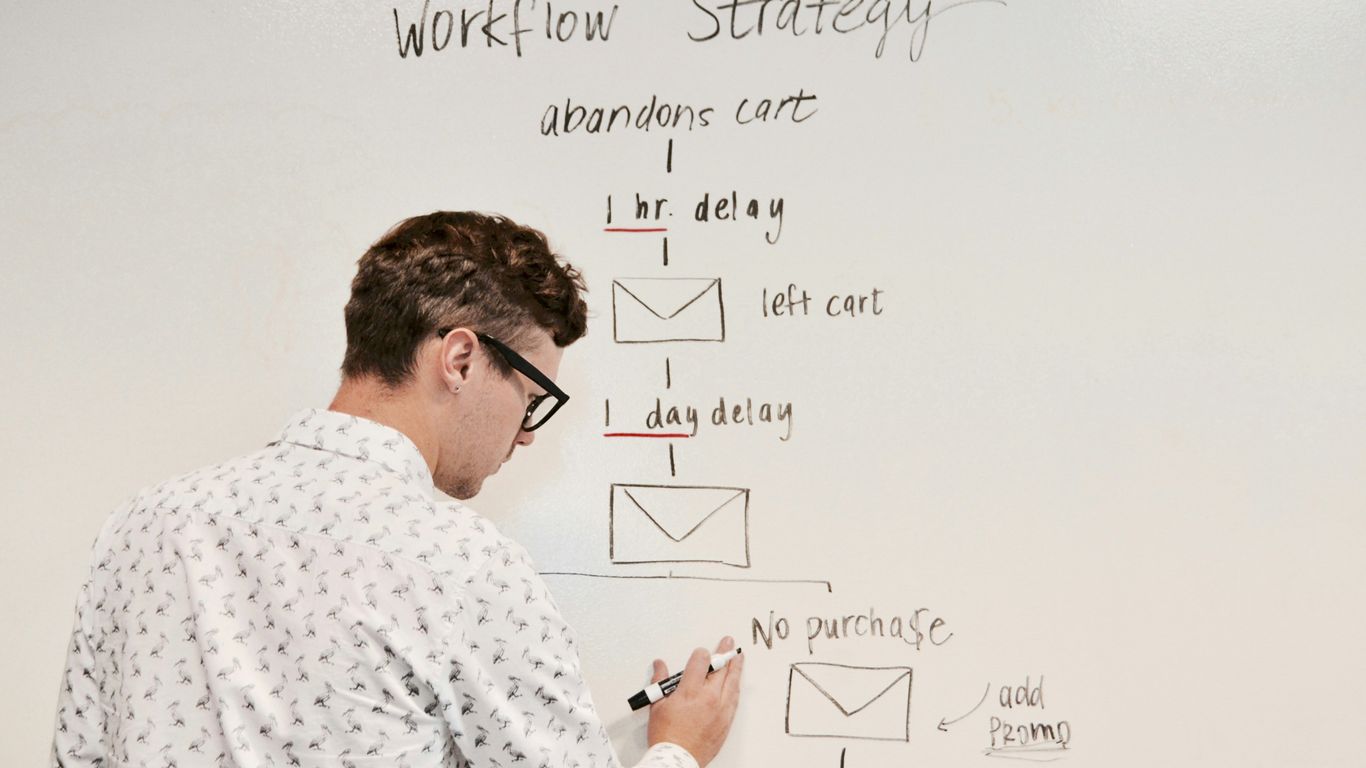
Recover abandoned carts, missed appointments, and unfinished inquiries
A reminder often works because the customer was interested but distracted. Keep it factual and helpful: what was left unfinished, what the person can do next, and how to get assistance. For missed appointments, offer a simple rescheduling path rather than a lecture.
Timing matters. Send close enough to the event that the context is fresh, but not so quickly that the message feels like surveillance. Give the recipient an obvious way to stop or change the follow-up.
Segment customers by needs, value, and buying stage
Segmentation can be simple. Separate prospects from customers, first-time buyers from repeat buyers, and active contacts from people who have gone quiet. Add service interest or location when it changes the offer. Every segment should exist because it receives a meaningfully different message.
Do not create dozens of tiny groups before you have enough volume to learn anything. Three useful segments beat twenty labels that nobody maintains. Review them when your offer, customer mix, or sales process changes.
Keep automation personal without pretending to be a robot
Use plain language, accurate details, and a visible way to reach a person. Automation can send the reminder, but a team member should be able to see the context and respond without making the customer start over. The line between helpful and creepy is usually relevance plus restraint.
A good test is this: would the message still feel respectful if the recipient knew exactly why it was triggered? If yes, keep it. If not, simplify the data use or skip the automation.
Stay compliant, profitable, and focused on improvement
Email marketing is a long game built on trust. Permission, accurate records, deliverability, and honest measurement are not paperwork around the work; they are part of the work. Rules vary by location and situation, so get qualified legal guidance for your business rather than treating a blog post as legal advice. Operationally, simple habits prevent many avoidable problems.
Get permission and make unsubscribing painless
Use clear consent language and identify who is sending the message. Do not hide an unsubscribe link or require a customer to explain why they are leaving. Honor preferences promptly, and be careful about adding people from business cards, events, or purchases without making the communication basis clear.
Permission is not permanent enthusiasm. Let people adjust frequency or topics when possible. A respectful exit protects the relationship better than forcing someone to stay annoyed.
Protect deliverability with clean lists and consistent sending
Send to people who expect your messages, remove invalid addresses, and monitor complaints and bounces. Sudden volume spikes can create problems, especially when a list has been neglected for months. Consistency helps readers recognize you and helps you notice when engagement changes.
Keep authentication and technical setup on your checklist, but do not use technical polish to excuse weak relevance. The most sophisticated sending infrastructure cannot make unwanted email welcome.
Test offers, subject lines, timing, and calls to action
Change one meaningful variable at a time when possible. Test a direct subject line against a curiosity-based one, or compare two offers with the same audience and timing. Record the result and the business outcome, not just the winning percentage.
Small businesses rarely need a laboratory. They need a habit of making a reasonable change, waiting long enough to learn, and applying the lesson to the next campaign. That is how improvement compounds.
Turn email results into more sales instead of vanity metrics
Connect campaigns to actions that matter: replies, calls, booked appointments, purchases, repeat orders, and profitable revenue. Opens and clicks can help diagnose a message, but they are not the finish line. A campaign is successful when it moves the right people closer to a valuable business action.
Review results by segment and offer. If a message gets attention but no action, fix the offer or the next step. If it creates sales but too many complaints, fix the promise and targeting. Numbers are useful when they tell you what to do next.
Ready for a Practical Conversation?
If your follow-up is inconsistent or good leads are slipping through, book a focused conversation with X1 Marketing Inc about your marketing, follow-up, and business growth. It is a practical place to discuss what should be automated and what should stay personal.
Conclusion
Small-business email marketing gets easier when you stop treating it as a weekly improvisation. Build a permission-based list, choose a manageable system, write one clear message at a time, and automate only the follow-up that truly benefits from consistency. Then measure customer action and keep improving the parts that produce profitable conversations.
Frequently Asked Questions
How often should a small business send marketing emails?
Start with a schedule you can maintain, such as weekly or twice monthly, and tell subscribers what to expect. Increase or reduce frequency based on engagement, complaints, and the value of the content.
What should a small business email about?
Send useful advice, answers to common questions, relevant offers, customer reminders, seasonal updates, and proof that helps people make a decision. Every email should have a clear reason to exist.
Is a large email list necessary to make sales?
No. A smaller list of relevant, engaged subscribers can produce more business than a large list of people who never wanted your messages. Fit and intent matter more than raw subscriber count.
What is the best lead magnet for a small business?
The best lead magnet solves a specific problem for a person who is likely to become a customer. Checklists, short guides, calculators, planning tools, and useful templates often work when they are closely tied to the buying decision.
Should every subscriber receive the same email?
Not necessarily. Basic segments based on customer status, interests, location, or buying stage can make messages more relevant. Keep segmentation simple enough to maintain.
How can email automation still feel personal?
Use timely triggers, plain language, accurate context, and an easy path to a real person. Automation should handle repetition while leaving judgment, empathy, and unusual questions to your team.
Which email metrics matter most?
Prioritize replies, bookings, purchases, repeat business, unsubscribes, complaints, and attributable revenue. Opens and clicks can help diagnose performance, but customer action is the stronger measure.