
Key Takeaways
Short videos give local businesses a practical way to become familiar, useful, and easy to choose. The winning approach is consistent, specific, and tied to a real next step.
- Focus on local questions, problems, and proof.
- Start with one or two platforms you can maintain.
- Use simple hooks, captions, and clear calls to action.
- Build a repeatable recording and publishing routine.
- Measure leads, visits, calls, and sales—not just views.
1. Why short-form video marketing for local business works so well
Short-form video puts a person, place, and useful idea in front of a potential customer quickly. That combination matters for local companies because people usually want confidence before they call, visit, or book. Done consistently, short form video marketing for local business makes your company feel present before the first conversation.
Attention is scarce—but local relevance cuts through
People scroll past broad claims all day. A video about a familiar neighborhood, a common local problem, or a question customers ask at your counter has a better chance of earning attention because it feels immediately relevant. You do not need a dramatic production; you need a reason for the right nearby person to stop.
A quick clip showing where to park, what to bring, or how long a service usually takes can outperform a vague “we’re the best” message. Specificity gives the viewer a useful reason to stay.
Familiar faces build trust faster than polished ads
A customer can learn a lot from seeing the owner, technician, stylist, trainer, or front-desk team speak plainly. Small imperfections often help because they signal that a real person is available on the other side of the screen. Trust grows through repeated, ordinary proof—not one expensive-looking advertisement.
Show the tone customers can expect when they walk in. If the business is calm, funny, precise, welcoming, or hands-on, let the video communicate that naturally.
Short videos turn everyday expertise into sales assets
The questions your team answers repeatedly are already a content plan. Explain why a repair costs more in one situation, how to prepare for an appointment, or which option suits a beginner. Each answer can keep working after the original recording day.
That is the useful shift: stop treating video as a campaign that disappears and start treating it as a library of helpful answers. A good clip can support a conversation, a landing page, a follow-up message, or a customer deciding between two providers.
The local-business advantage big brands cannot easily copy
A national company can buy reach, but it cannot genuinely know every street, event, seasonal annoyance, and customer habit in your area. Your business can show the real setting and speak in the language people nearby already use. That local texture is difficult to imitate at scale.
For a practical overview of hooks, simple scripts, and turning attention into leads, this video marketing guide is a useful companion. The principle is straightforward: make the business recognizable before asking people to buy.
2. Choose the right platforms without spreading yourself thin
You do not need to publish everywhere to make short video work. Choose the platform where your likely customers already spend time, then build a routine you can repeat without resenting it. One strong weekly system beats five abandoned profiles.
When Instagram Reels should be your starting point
Instagram Reels can be a sensible starting point when your customers respond to visual work, personalities, local lifestyle, or recommendations from friends. Use the format to show finished work, quick demonstrations, staff introductions, and small moments that make the business feel active.
Keep the profile useful after someone watches. The name, location, contact details, and booking path should make sense together, so curiosity does not die at the profile page.
How TikTok can create local awareness quickly
TikTok rewards clear ideas and a natural voice more than stiff corporate language. A local business can use it to react to seasonal questions, explain a surprising detail, or join a relevant format without pretending to be something it is not.
Do not force every trend into your brand. A plain, helpful answer delivered with energy is often more believable than a borrowed joke that has nothing to do with the customer.
Where YouTube Shorts fits into long-term discovery
YouTube Shorts can extend the life of practical answers, especially when people search for demonstrations, comparisons, and quick explanations. Organize videos around the questions customers actually type or say, and make the title clear enough to understand without clever wordplay.
A useful Short can also point viewers toward a longer explanation, a service page, or a way to contact the business. Think of the platform as part of your discovery system, not only a place to chase a spike in views.
Why your Google Business Profile deserves supporting video content
Your Google Business Profile is often where a high-intent customer checks the basics after discovering you elsewhere. Fresh visuals, accurate information, and helpful posts can reinforce the impression created by a short video. The Google Business Profile tips here cover the broader work of keeping that local storefront trustworthy and useful.
The video should support the profile, not replace it. Make sure hours, services, phone number, location, and next steps are current before sending more people there.
3. Find short-video topics your customers already care about
The best topics are rarely hidden in a brainstorming document. They are in unanswered calls, repeated objections, review comments, staff conversations, and the questions people ask just before spending money. Listen first, then record the answer in a tighter form.
Answer the questions customers ask before they buy
Write down every question that comes up during calls and appointments for one week. “How much does it cost?” may need a thoughtful answer rather than a single number, while “How long does it take?” might become a simple timeline video. The goal is to remove uncertainty before it becomes a reason to leave.
Use the customer’s wording in the opening. It will sound more natural than marketing language and make the right viewer feel seen.
Show the problem, the fix, and the proof
A useful structure is easy to remember: identify the problem, show what changes, and provide evidence that the fix is real. A baker can show why a loaf collapses, a contractor can explain a visible warning sign, and a fitness studio can demonstrate a beginner adjustment.
The proof does not have to be flashy. A close-up, a process shot, a finished result, or a calm explanation from the person doing the work can carry the point.
Turn local places, events, and habits into content
Your town supplies material that generic content cannot. Mention a seasonal festival, a weather pattern, a busy intersection, a neighborhood routine, or a local question that affects how customers use your service.
This is not an excuse to name-drop. The local detail should help someone make a decision, find you, prepare properly, or recognize that you understand the area.
Use behind-the-scenes moments to make the business memorable
Behind-the-scenes video works when it reveals something customers normally do not see. Show the morning setup, the cleaning routine, the tools laid out for a job, the ingredient preparation, or the small quality check before delivery.
Keep the camera moving only when movement adds meaning. A steady, well-lit view of a real process is more useful than a fast montage that leaves nobody sure what happened.
Repurpose testimonials, reviews, and customer victories
With permission, turn a thoughtful review into a short story: what the customer needed, what changed, and what they would tell someone in the same position. Do not read praise over stock footage and call it a case study. Let the result stay specific and attributable to that individual customer.
A local trust strategy can help you connect testimonials, before-and-after evidence, helpful guides, and community presence into a more complete picture. Video is strongest when it supports those other trust signals rather than carrying the entire burden.
4. Create videos that hook attention and drive action
A short video earns its next second one second at a time. Start with a recognizable problem, make the benefit obvious, and remove anything that delays the point. The finished clip should feel like a useful conversation, not a miniature television commercial.

Open with a problem your local customer recognizes instantly
“Here is why your basement still smells musty” is stronger than “Welcome to our page.” “Before you order another cake, check this” creates a reason to continue. A good hook describes a situation the viewer has experienced or fears experiencing.
Keep the first sentence close to the customer’s concern. Your logo can appear later; attention cannot be recovered once it is gone.
Use simple scripts instead of winging every recording
A script does not need to sound scripted. Use three prompts: what is the problem, what should the viewer know, and what should they do next? Write the words in the way you actually speak, then cut anything that repeats the point.
Record two or three versions with different openings. That small habit gives you options without requiring another full production session.
Make the payoff clear before the viewer scrolls away
Tell people what they will learn or see near the beginning. If the payoff is a safer way to prepare, a faster ordering process, or a sign that a repair is urgent, say so plainly. Curiosity helps, but confusion does not.
A short video can still have a beginning, middle, and end. The viewer should finish knowing one useful thing and why it matters.
Add captions, location cues, and strong visual proof
Many people watch without sound, so captions should carry the essential message rather than decorate the screen. Add a neighborhood, city, or service-area cue when it helps qualify the audience. Show the object, process, result, or person you are discussing.
Before publishing, check that text is readable on a small phone. Clear visuals and one useful promise usually beat a crowded frame full of competing messages.
End with one specific next step
Do not finish with “Let us know what you think” if the real goal is a booking. Ask the viewer to call, send a message, visit this week, save the video, or use a particular booking link. One action gives the interested person less to figure out.
The call to action should match the video. A preparation tip might invite a question; a product demonstration might point to the item; a local offer might give a time limit without sounding frantic.
5. Build a production system you can actually maintain
Consistency does not come from motivation. It comes from lowering the number of decisions required each time you record. Pick a manageable rhythm, assign a few repeatable formats, and make the process ordinary enough to survive a busy Tuesday.
Batch a month of videos in a single afternoon
Choose four topics, outline each one, and record several openings or angles while the camera is already set up. Change shirts or locations if you want variety, but do not turn every clip into a separate production. Batching protects the schedule when customer work takes over.
Edit and label the files soon afterward. A video that cannot be found is not part of your marketing system.
Record professional-enough footage with basic equipment
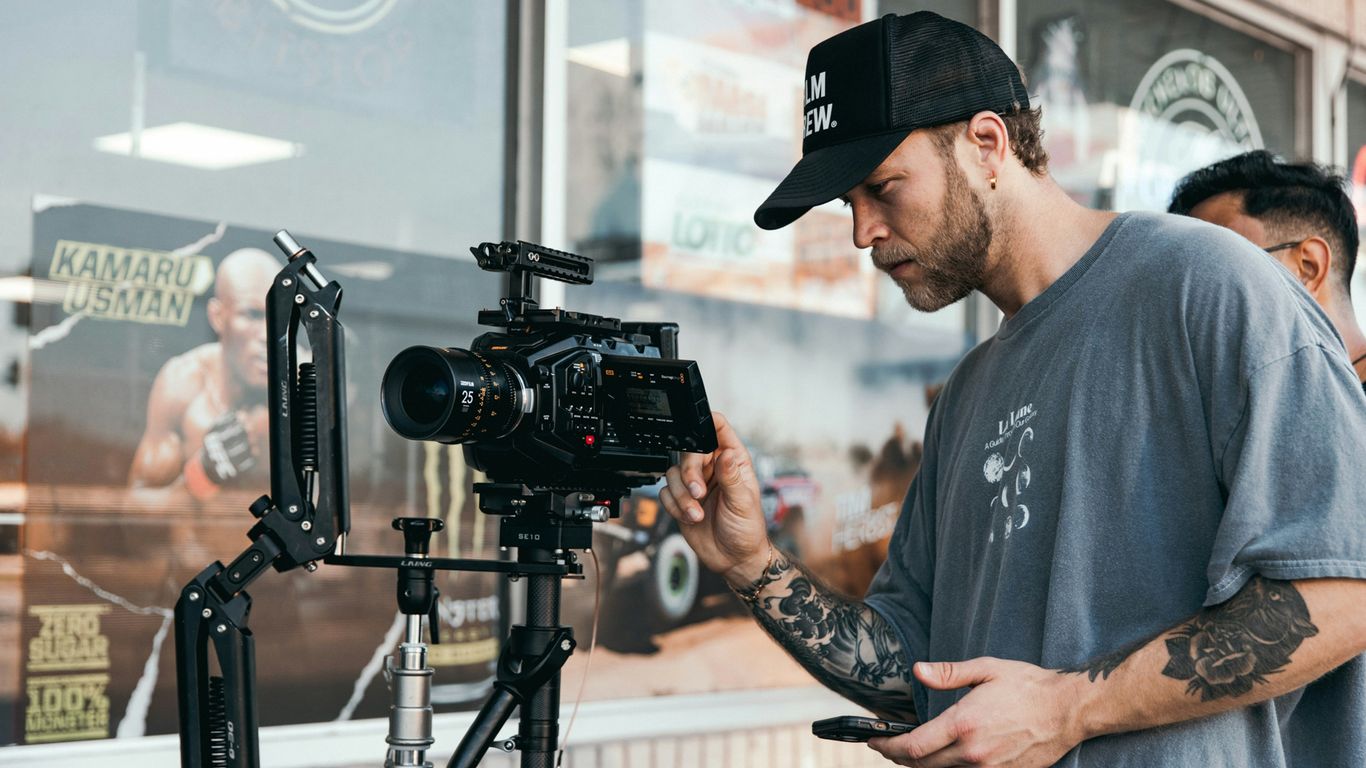
A phone, a stable stand, a quiet corner, and decent light can produce credible footage. Face a window, clean the lens, and place the microphone close enough to capture clear speech. The customer will forgive a modest setup; they will not work hard to understand muffled audio.
Use the same visual basics repeatedly. Familiar framing can become part of the business’s identity.
Create repeatable series instead of chasing random trends
A series gives both you and the audience a pattern to recognize. Try “one question from the front desk,” “before you book,” “tool of the week,” or “local mistake to avoid.” The title and structure do some of the creative work for you.
Trends can be seasoning, not the meal. Your own recurring formats are more likely to build useful familiarity over time.
Share responsibilities when the owner cannot be on camera
The owner does not have to narrate every clip. A team member can demonstrate the work, a customer-service employee can answer common questions, and someone behind the camera can gather footage for a voiceover. Choose the person who knows the subject and is comfortable enough to be clear.
Give everyone a short brief and a simple approval process. That keeps shared ownership from becoming a committee meeting.
Keep a content bank for slow days and busy weeks
Save questions, customer language, interesting details, seasonal reminders, and footage that could support future posts. A small content bank prevents the familiar panic of opening a blank calendar on publishing day.
Organize it by topic and urgency. Evergreen answers can fill a quiet week, while timely clips can be recorded when the relevant event or season arrives.
6. Turn views into local leads, visits, and sales
Attention is only the first handoff. A viewer must be able to understand what you offer, know whether you serve their area, and take the next step without hunting through an outdated profile. Build that path before you celebrate a spike in reach.
Connect every video to a relevant offer
An offer does not always mean a discount. It might be a consultation, estimate, reservation, sample, checklist, menu item, or appointment. Match it to the problem addressed in the video so the next step feels like a continuation rather than a sudden sales pitch.
If you do use a promotion, make the terms and expiration clear. Ambiguity creates questions that your team then has to untangle.
Use location-based calls to action without sounding desperate
Say who you serve and where, but keep the language conversational. “We’re near the library in downtown Mesa—bring this question in and we’ll point you in the right direction” sounds more human than a string of city names and exclamation points.
Local relevance is a filter. It may reduce irrelevant views while improving the quality of people who respond.
Make booking, calling, or visiting frictionless
Check the path from video to action on a phone. The button should work, the phone number should be tappable, and the address should be accurate. If someone needs to fill out a long form just to ask a basic question, many will simply move on.
Give the team a clear process for handling messages and calls. A smooth front door is wasted if the follow-through inside is slow or confusing.
Capture leads with landing pages, DMs, and tracking links
Use a dedicated page when the video promotes a specific service or event. A short form, clear promise, and matching headline make it easier to understand what happens next. Tracking links or platform-specific prompts can help you distinguish video-driven interest from other traffic.
For a broader look at moving beyond attention toward calls and bookings, this local marketing playbook offers a useful revenue-minded perspective. Keep the tracking simple enough that you will actually review it.
Follow up quickly while interest is still hot
A person who messages after watching a video is giving you a narrow window of attention. Reply with the answer, offer the next step, and ask only for information you genuinely need. If a call is missed, a prompt response is better than hoping the person tries again.
The goal is not to pressure anyone. It is to make it easy for an interested local customer to continue a conversation.
7. Measure what matters—and fix what does not
Short-form video produces plenty of numbers, which can create the illusion of control. Views and likes tell you something about distribution and reaction, but they do not automatically tell you whether the business is healthier. Connect content performance to customer behavior wherever you can.
Separate vanity metrics from revenue signals
A video with modest reach may bring a valuable customer, while a widely shared clip may attract people who live nowhere near you. Review the numbers in context and ask what happened after the view. Revenue is the referee when the business goal is growth.
That does not make reach useless. It simply keeps reach in its proper place: an early signal, not the final verdict.
Track retention, profile visits, calls, and direction requests
Watch where people stop viewing, whether they visit the profile, and whether local actions rise after publishing. Calls, messages, bookings, coupon uses, and direction requests are closer to business value than applause. Ask new customers how they found you when the answer is not visible in your analytics.
Keep a simple record so patterns become visible across several weeks. One post is a clue; a consistent group of posts is evidence.
Test different hooks, offers, and video formats
Change one major variable at a time when possible. Test a question against a warning, a demonstration against a talking-head explanation, or a direct offer against a soft invitation. Give each version enough time and comparable distribution before deciding.
Record the lesson, not just the winner. A hook that works for urgent repairs may not fit a leisurely retail purchase.
Know when to boost a winning organic video
Paid distribution makes more sense when a video has already shown signs of useful engagement or local relevance. Before spending, confirm that the profile, offer, landing page, and follow-up process are ready. Otherwise, you may pay to send more people into a leaky path.
Set a modest test budget and a clear success measure. Stop treating the boost as a rescue mission for content that never made its point organically.
Avoid the costly mistakes that make local video marketing stall
Most stalls are operational rather than creative. The business publishes sporadically, targets everyone, hides the location, ignores messages, or judges success by views alone. Fixing the handoffs often produces more improvement than buying better equipment.
Start with one platform, one audience, one recurring series, and one trackable action. That is enough to learn what your local customers respond to without turning video into a second full-time job.
Start Your Next-Level Conversation
If you want practical help connecting marketing, follow-up, and predictable business growth, book a conversation with X1 Marketing. Pick a 30-minute time that works, and use the discussion to clarify what to fix next—no pressure, just a focused conversation.
Conclusion
Short videos are not magic, and they do not need to be. They are a simple way to show your expertise, your people, and your place before a nearby customer commits. Build a modest system, connect each clip to a useful action, and let real customer behavior—not vanity numbers—guide the next recording.
Frequently Asked Questions
How long should a local business video be?
Make it as short as the idea allows. A focused answer may take 15 seconds, while a demonstration may need closer to a minute; remove anything that does not help the viewer understand or act.
How often should a local business post short videos?
Choose a schedule you can maintain for at least several months. One or two useful videos each week is generally better than publishing heavily for a few days and disappearing.
Should a local business be on every video platform?
No. Start where your customers are most likely to notice you and where your team can publish consistently. Add another platform only after the first workflow feels manageable.
What should a local business show in its videos?
Show answers to buying questions, real processes, finished work, staff expertise, local context, and customer-approved results. The subject should help people decide whether and how to contact you.
Do short videos need professional equipment?
Usually not. Clear audio, steady framing, useful light, readable captions, and a specific message matter more than an elaborate camera setup.
How can short videos generate leads?
Connect each video to one clear next step, such as calling, booking, messaging, visiting, or using a relevant landing page. Make that action easy to complete on a phone and track it when possible.
What should a local business measure first?
Begin with retention, profile visits, messages, calls, bookings, direction requests, and sales conversations. Reach can provide context, but customer actions reveal whether the content is helping the business.


